
If you have been around sheep for any amount of time, you have probably heard someone warn, “Never feed sheep copper, it will kill them.”
That statement comes from real experience. Sheep are extremely sensitive to copper compared to other livestock. Their livers can slowly build up copper until one stressful day, everything spills over. The result is jaundice, dark urine, and sudden death.
But here is the twist. Sheep also cannot live without copper. It is essential for their wool, reproduction, immune health, and growth. The challenge is that the line between deficiency and toxicity is very narrow. That razor-thin margin is what makes copper one of the most misunderstood minerals in shepherding.
So why do feed tags list copper? Why are loose minerals better than blocks? And when is grain actually appropriate for sheep? Let’s go step by step.
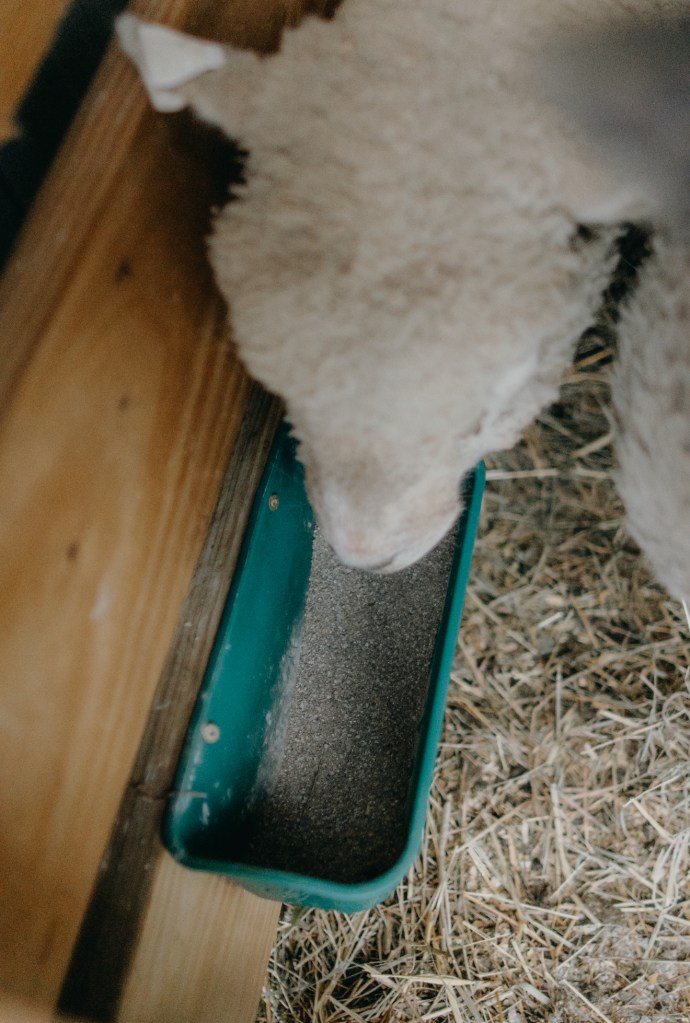
Why Copper Matters for Sheep
Copper is a trace mineral that plays several critical roles. Sheep need it for strong wool, for red blood cell production, for fertility, and for immune function.
Signs of deficiency may include: faded or washed-out wool, steely or brittle fleece, poor lamb growth, infertility, anemia, or general weakness.
Signs of toxicity may include: no outward symptoms at first, then a sudden crash after stress, yellow eyes and gums, dark or bloody urine, and sudden death.
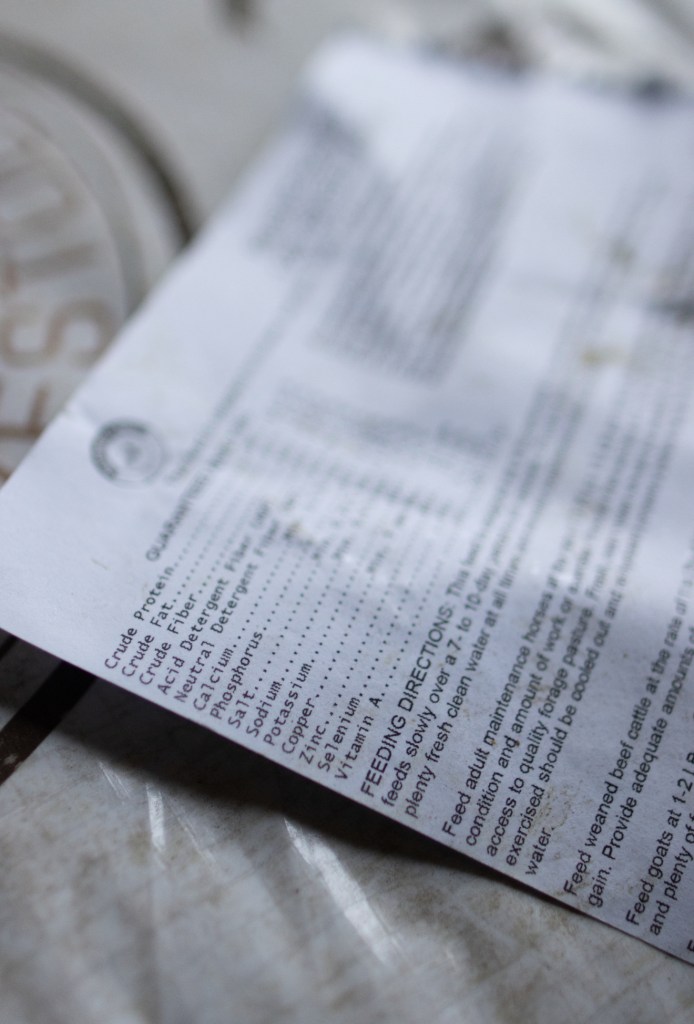
Why Copper Appears on Sheep Feed Tags
Seeing copper on a sheep feed label can be alarming, but it does not mean the feed is unsafe. Copper shows up on labels for three main reasons.
It is legally required for feed companies to list copper if it is present.
Plants such as alfalfa, soybeans, and distillers’ grains naturally contain copper.
Sheep-specific feeds may add very small amounts of copper to prevent deficiency.
The key is to always use a feed that is labeled for sheep. Feeds or minerals designed for goats, cattle, or horses contain far too much copper for sheep.
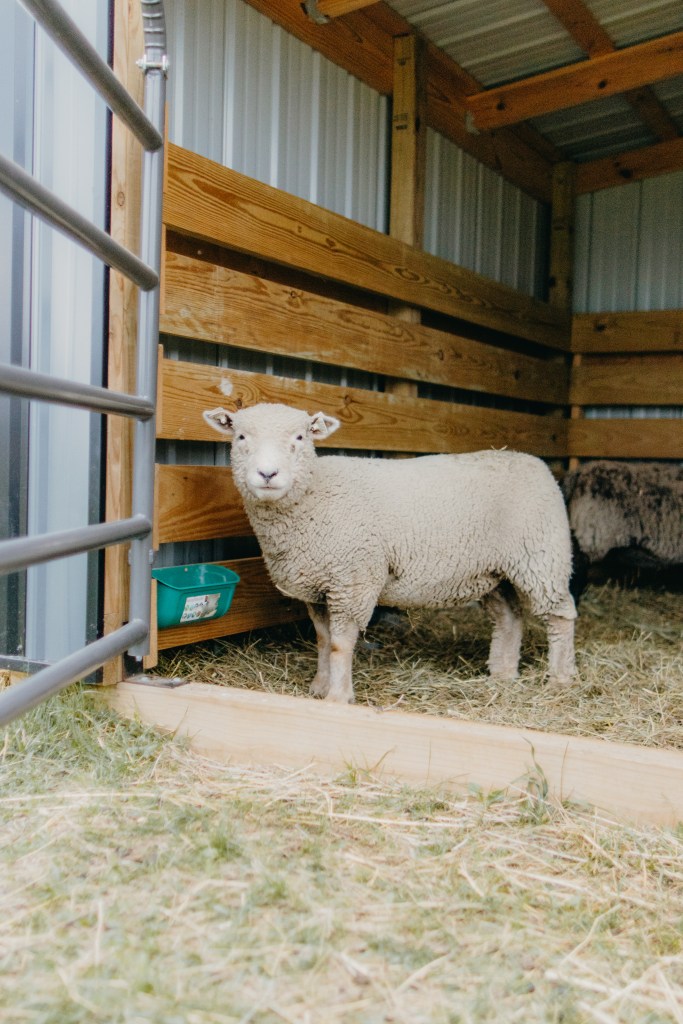
Grain and When It Is Useful
Sheep do not require grain as a daily diet. For most of the year, good pasture and hay provide the nutrition they need. Grain is used as a tool in specific situations where extra energy or protein is needed.
Times when grain is appropriate include:
• Late gestation to support ewes carrying multiple lambs
• Lactation to provide extra energy for milk production
• Growing or finishing lambs to increase weight gain for market or show
• Preparing ewes for breeding season, often called flushing, to improve fertility and ovulation
• Show sheep to maintain body condition and bloom
Grain is an energy and protein supplement. It is not designed to replace minerals or to cover all nutritional needs.

Why Loose Minerals Are Better Than Blocks
Loose minerals are the best way to provide sheep with their daily trace mineral requirements. Blocks, while convenient, are not effective for sheep.
Sheep do not have rough tongues like cattle, so they cannot lick off enough from a hard block. Because of this, their intake from a block is usually too low to meet requirements. Loose minerals allow sheep to nibble exactly what they need. This free-choice system works with their natural instincts.
Always provide a sheep-specific loose mineral in a covered feeder to keep it dry and fresh.
Copper Safety in Practice
Managing copper is not about avoiding it completely, but about balancing it carefully.
Use only sheep-specific minerals and feeds.
Do not share minerals between sheep, goats, or cattle.
Know your local soil profile. Some regions are copper deficient while others are naturally high.
Watch your flock for both deficiency and toxicity signs.
Work with your veterinarian to confirm levels through blood tests or liver checks when needed.
The Bottom Line
Copper is both a friend and a foe for sheep. They require it for health, yet only in carefully balanced amounts. Grain is not a daily necessity but can be an important tool during breeding season, lambing, and lactation. The real key to safe nutrition is simple. Choose sheep-specific feeds and always provide loose minerals instead of blocks.
Do not fear copper. Respect it. With the right management, copper will strengthen your flock instead of harming it.


 KLM Farmstead
Leave a comment